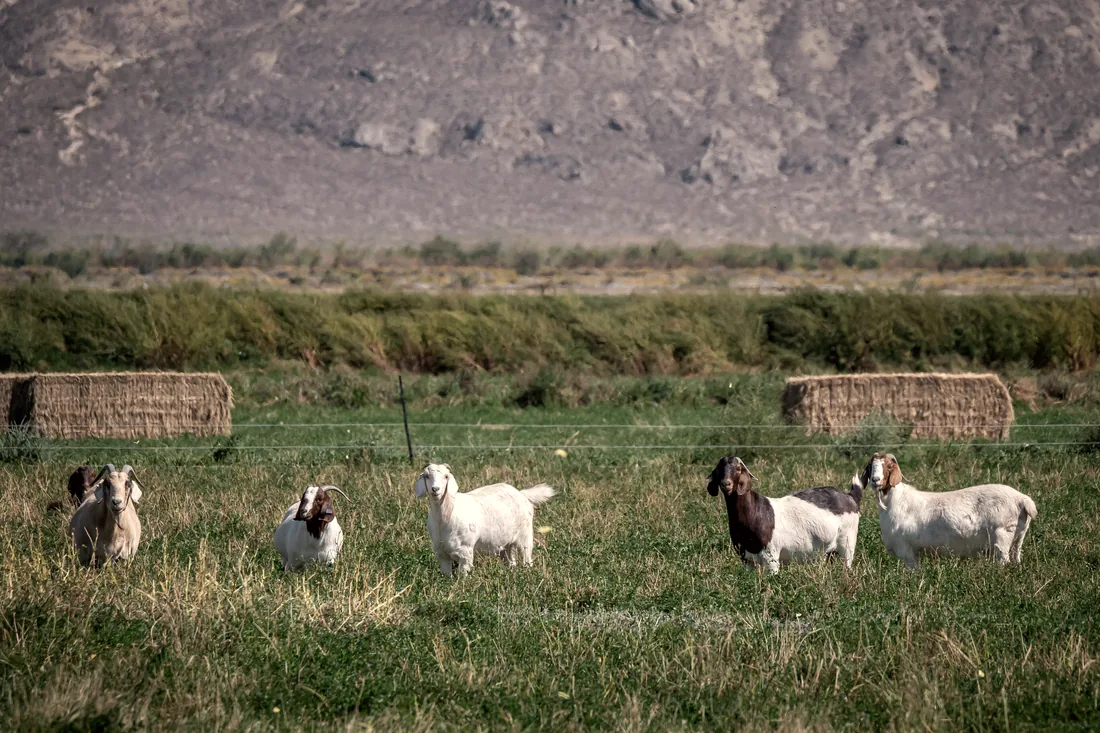
Why goats and not cows
A dairy cow produces more milk in a week than a household can drink, freeze, or turn into cheese. A goat produces a few litres a day, eats browse that a cow will not touch, and can be handled by one person. On a small parcel with trees, that last point decides it: goats convert brush into milk, and the brush is otherwise a cost.
Goat milk is naturally homogenised — the fat globules are small enough to stay suspended — which makes it easier to digest and easier to work with in the kitchen, though it also means cream will not rise and the butter is not worth the effort.
The routine
Two does, milked once a day through the season, which is enough for the household and a surplus that goes into cheese, yoghurt, and the occasional batch of soap. Milking by hand takes fifteen minutes; by machine, less, but the hand version is the one that teaches you what a healthy udder feels like.
The herd is closed. We keep our own replacements and bring in a buck only every second year, which keeps disease pressure low and the paperwork short. The state requires a scrapie program enrolment for a herd this size, and we are in it.
Integration
The does are the first rotation in the silvopasture in spring, ahead of the cattle, because they browse higher and harder and do the work a mower cannot reach between the rows. Their manure goes straight onto the pasture; their bedding goes into the compost that charges the biochar.