Why this insect
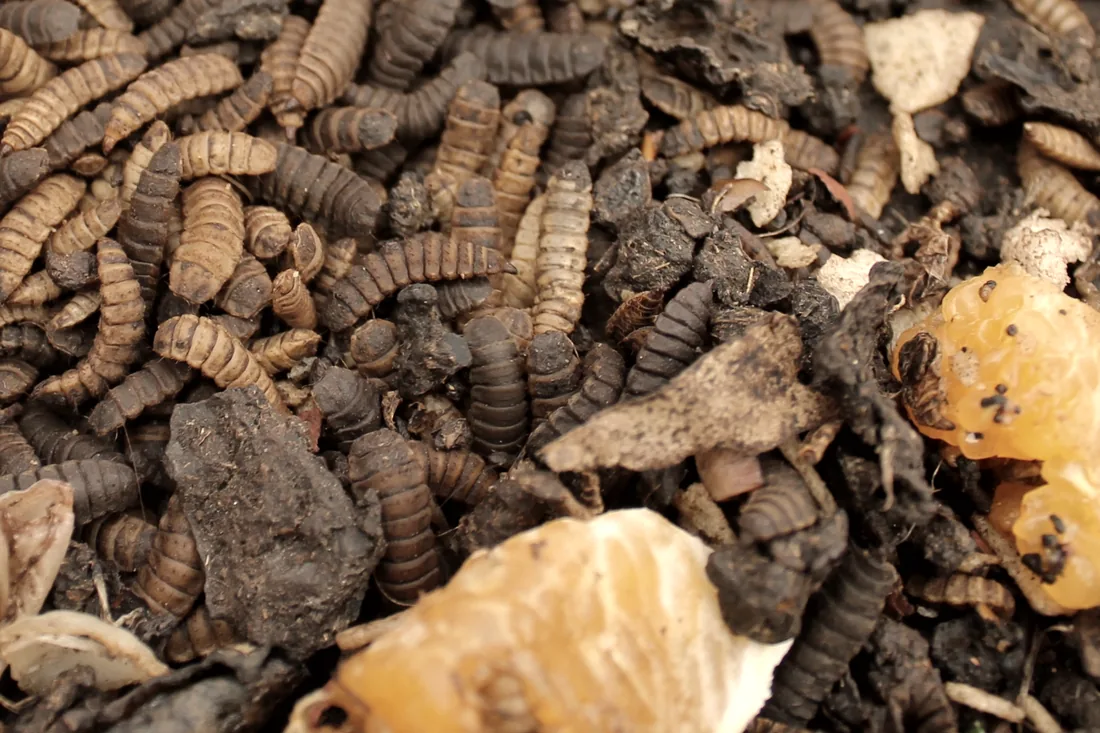
The black soldier fly larvae eat almost anything organic and convert it to body mass at an extraordinary rate: a hundred grams of eggs becomes several kilos of larvae in a fortnight. They are high in protein and fat, they are eagerly eaten by poultry and fish, and they do not survive as adults in this climate, so the population has to be restarted each year rather than controlled.
They also out-compete houseflies in the same bin and reduce the volume of waste by as much as eighty percent, leaving a residue that is a usable soil amendment.
The setup
Our bin is a modified tote with a sloped floor and a collection ramp. Mature larvae crawl uphill, away from the moisture, and drop into a bucket without any intervention — this self-harvesting behaviour is the reason the system is practical at a small scale.
Feedstock is kitchen waste from the household, plus culled produce and the occasional bucket of spent grain. The bin is kept under cover and above fifty degrees Fahrenheit; below that the larvae slow down and stop.
Limits
This is a household-scale system, not a waste-processing plant. It handles perhaps twenty kilos of waste a week at capacity. It smells if it is overfed, and it attracts rodents if it is not sealed. We are documenting it because it is replicable in a suburban backyard, which is where most of the food waste actually is.