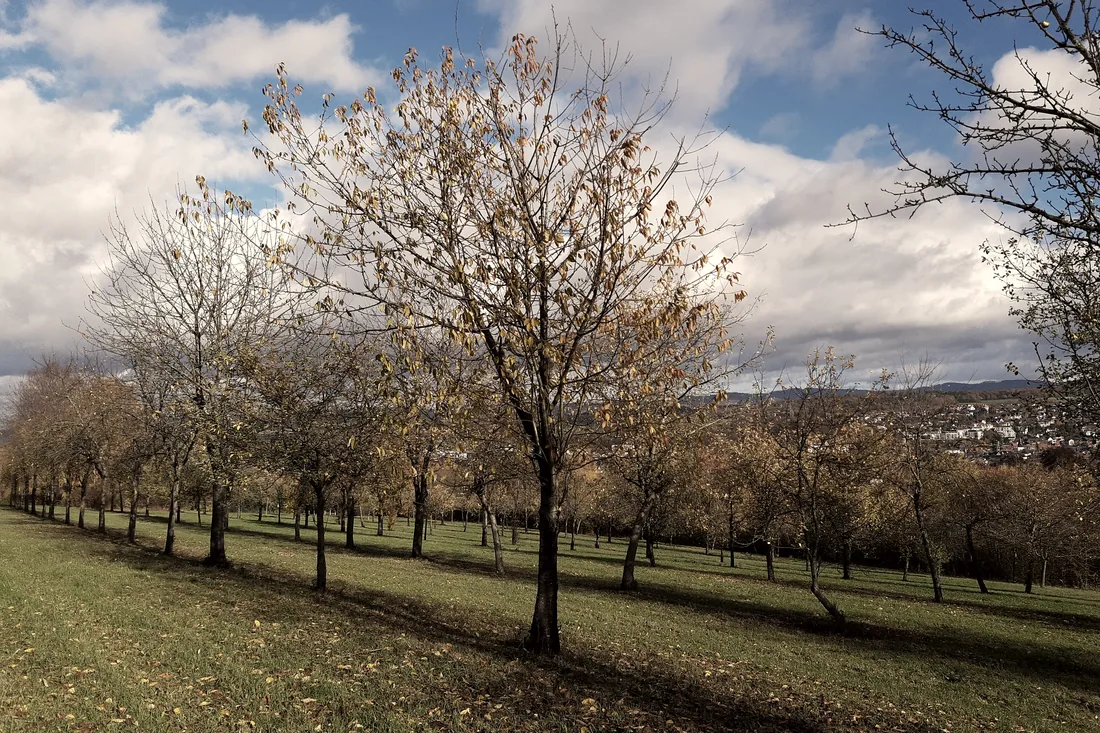
The idea
Silvopasture integrates trees, forage, and grazing animals on the same acre. It is not woodland that happens to be grazed, and it is not a pasture with a windbreak. It is a designed system where the canopy moderates the microclimate, the forage feeds the animals, and the animals cycle nutrients back to the trees.
In western Washington the argument is mostly about summer. Shade reduces heat stress, which dairy animals feel more than most; grass under partial shade stays palatable weeks longer into August than grass in the open. The trees are not decoration on the system. They are a piece of the irrigation.
Our layout
Rows are planted on the keyline, twenty-four feet apart, with the alleys wide enough for a small tractor and a mower. Species are a mix: alder and black locust for nitrogen, Douglas fir and western redcedar for long-term timber and wind, and a few apples and pears in the sunniest row for our own use.
Grazing is rotational and tight. Paddocks are small enough that the animals are on them for a day or two and off for a month, which lets the forage recover and keeps the young trees from being browsed to the bud. Tree guards are ugly for three years and then no longer necessary.
What we are learning
The hard part is not the planting. It is the timing — the two or three weeks in spring when the trees are pushing growth and the animals want everything green at once. Silvopasture rewards patience and punishes a fixed calendar.